
Frolicking Vultures
the poetics of scavengers and creative transformation

On my way home the other day, I saw three vultures frolicking on the side of the road.
It made me laugh out loud.
It struck me as so poetic—this group of three scavenging birds hopping lightly around their little pile of rotting roadkill. Jumping around. Flapping their wings in the long grass, breezing through the blanketflowers and primrose.
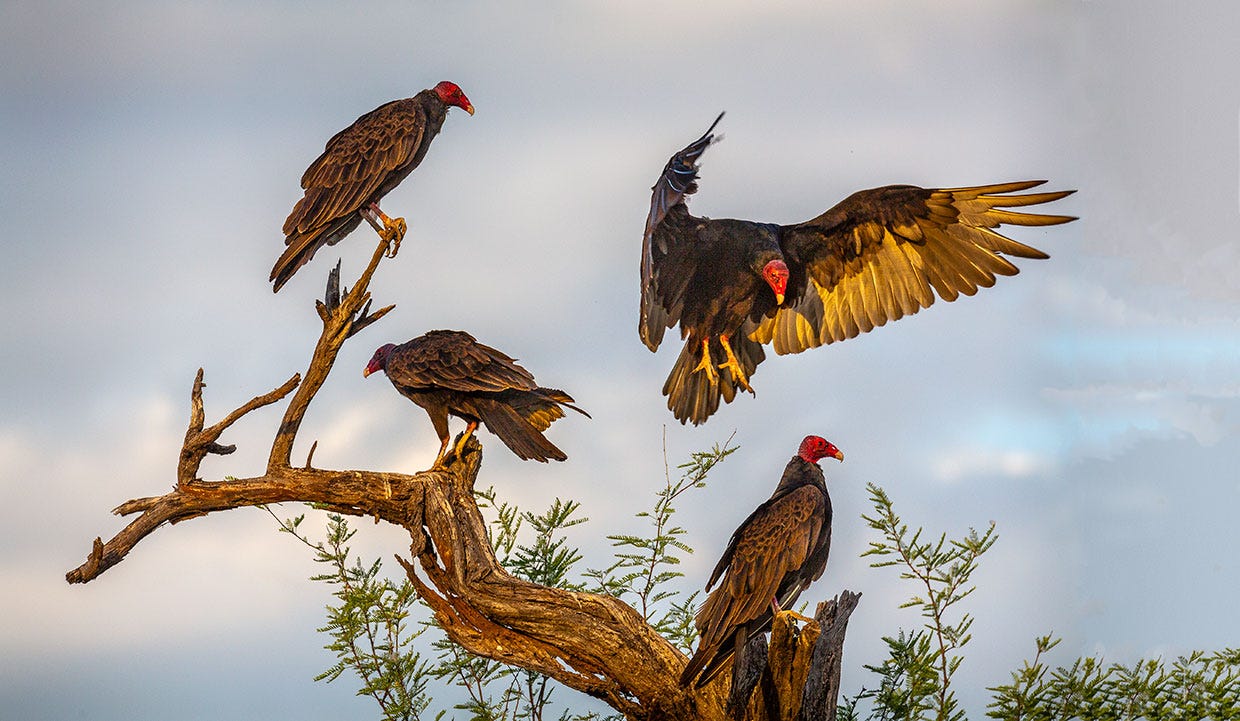
It is so easy to relegate these animals to the underworld. They stalk the shoulders of highways, unbothered by cars rushing past. They spread their wings in the sky and glide huge circles around death. They are drawn to the things that the rest of us are utterly repulsed by.
It feels like frolicking should be reserved for the whimsical. The sweet little songbirds resting on branches, the baby bunnies emerging from their dens in spring. In contrast, these large, clunky, hunched birds looked strange as they hopped around.
But truly, why shouldn’t they frolic, too?
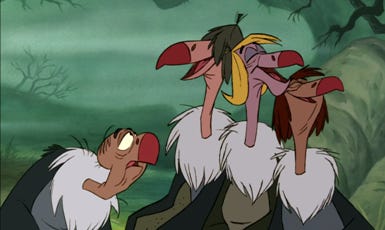
The more I think about vultures—and I’ve been thinking about vultures more this week than probably ever before in my life—I feel very grateful for them.
Scavengers in general play a hugely important role in our ecosystems. There is always going to be a lot of death in the natural world. Scavengers, like vultures, are nature’s unpaid cleanup crew. Not only are they helping to get rid of carrion, they help to disperse the nutrients from the dead creature back into the environment around it and help prevent the spread of disease-causing bacteria. Their stomach acid is incredibly corrosive, so they can digest things that would be fatal to other animals, even other scavengers.1
Yesterday, during a co-working session with two friends, I was talking to Ashley about the Substack sermon she is writing this week. She brought up Psalm 23,2 saying that it always stands out to her that even in the valley of the shadow of death, even in the presence of our enemies, the Psalmist’s Good Shepherd makes us lie down in green pastures. As soon as she said this, I stared at her and said, “Vultures!”
God bless my friends for putting up with the weird shit that comes out of my mouth.
Okay, but vultures—When I think of “the valley of the shadow of death,” you better believe there are vultures circling in that sky. The landscape is desolate, lonely, deserted, dry; the scavengers have their place and know their role. They subsist on the death that exists here.
But what’s this about green pastures? Now all of a sudden, my mind is circling right back to the green grass on the side of the road where my three vulture friends were whimsically hopping around. What if even the vultures don’t have to stay in the valley of the shadow of death forever? What if the Good Shepherd is good to them, too?

I feel kind of bad for laughing at the frolicking vultures now. You know, they were just doing their thing, living their life, and it was my own sense of what is normal—and my own superimposition of meaning—that made the whole thing absurd and funny and poetic.
But daggumit, I can’t help it, I do think vultures frolicking on the side of the road is beautiful. And the more I sit with it, the more I start to feel connected with them.
Our roles as artists, poets, preachers, teachers, creators of all kinds are not that dissimilar to the roles of vultures. Vultures take in something that is ugly and undesirable—take it into their very being—and send it back out as something beneficial. Their role is one of transformation.
So often, I’m looking at the horrors of the world, and from my perspective as an artist, I feel compelled to process them and speak to them through the medium of beauty.
It’s not always as direct and effective as the stomach acid of a vulture—oh, to have that level of efficiency—but transformation is always happening through the creative process. Transformation from ugly, painful, disjointed, meaningless, and unclear building blocks. Transformation into something that tells a story of beauty and hope. Even when the finished artwork/writing/music/whatever communicates anger, grief, pain, and hurt, there is hope in the act of creating it. And in order to create something out of those undesirable building blocks, we must allow them to affect us. We must take them into our very being. The transformation of the creative process doesn’t happen somewhere out there; it happens within our own bodies, minds, and spirits.
If nothing ever died, we wouldn’t need vultures.
But it does, and so we do.
If nothing ever hurt, we wouldn’t need artists.
But it does, and so we do.
My friend Kristin put it best yesterday in our coffee shop booth.
“Thanks be to God for vultures.”
Lots of love,

Rev. Mollie Donihe Wilkerson (she/her)
molliedonihe.com
If you liked this, you may also enjoy this piece on the physicality of making art.
And if you found my work meaningful, consider buying me a coffee. <3
P.S.
Prints of my critter icon series are finally available!
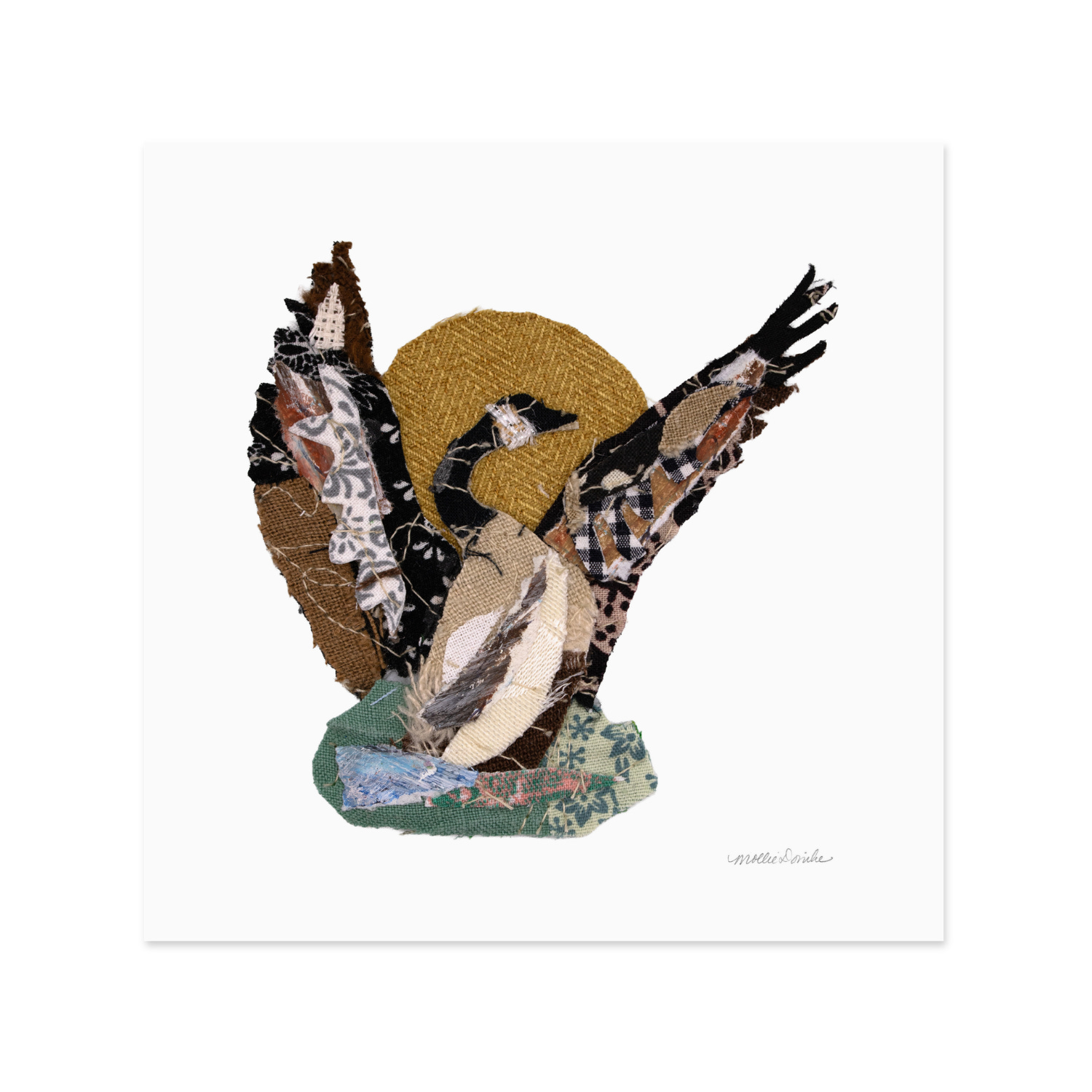
The 5 prints include icons of everyday saints Raccoon, Praying Mantis, Wild Goose, Chrysalis, and Beetle. Maybe I’ll make Saint Vulture next.
This info came from the wikipedia post on vultures. You should read it. It includes lots of interesting stuff that didn’t make it into my essay, like how vultures urinate on themselves to keep themselves cool in hot weather. Cool.
1 The Lord is my shepherd; I shall not want.
2 He makes me lie down in green pastures;
he leads me beside still waters;[a]
3 he restores my soul.[b]
He leads me in right paths[c]
for his name’s sake.
4 Even though I walk through the darkest valley,[d]
I fear no evil,
for you are with me;
your rod and your staff,
they comfort me.
5 You prepare a table before me
in the presence of my enemies;
you anoint my head with oil;
my cup overflows.
6 Surely[e] goodness and mercy[f] shall follow me
all the days of my life,
and I shall dwell in the house of the Lord
my whole life long.[g]
Okay, obsessed with this. Vultures! Creative process! Love this reflection.